

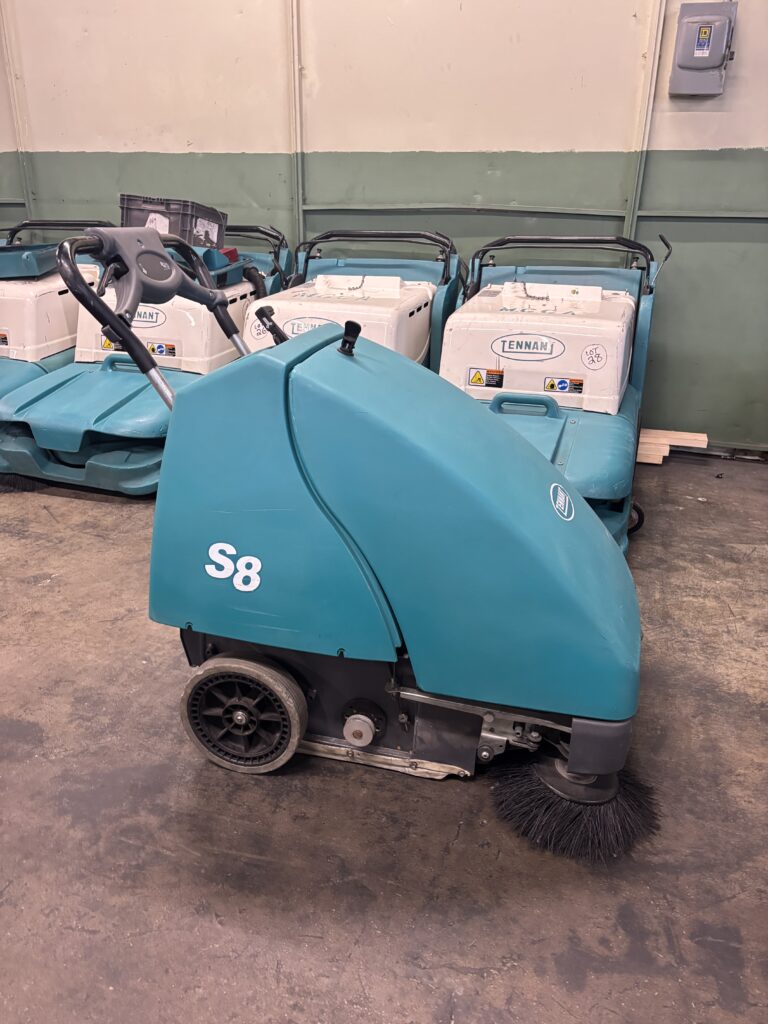

Floor scrubbers and sweepers play a critical role in keeping commercial and industrial facilities clean, safe, and efficient. From warehouses and manufacturing plants to agricultural operations and farm facilities, the right cleaning equipment reduces labor, improves safety, and protects long-term flooring investments.
Whether you manage a distribution center, food processing plant, or a working farm, choosing the right machine starts with asking the right questions.
Before comparing models, clarify what you need to clean.
Ask yourself:
Sweepers are best for dry material commonly found in warehouses, barns, and storage areas. They often leave a dull gritty finish eaven on shinier floors.
Scrubbers are designed for completely dust free wet cleaning, deeper soil removal, and faster drying — especially important in active work and high-traffic environments. They leave a white glove finish, no streaks no grit, only shine.
A word of caution: Many warehouse locations want sweeping for the typical large pallet chunks, shrink wrap “tails”, and broken off flaps of cardboard. The unfortunate reality is most long or large debris is too big to whisk into a hopper and often need manual pickup prior to sweeping. Other than facilities generating metal, plastic or wood waste in their process; most commercial and agricultural facilities get 90%+ of the clean look and feel they are seeking from scrubbing not sweeping. If you’re generating chips, shavings or other waste material not suitable for typical plumbing disposal or not currently implementing a wastewater separation sytem, you may benefit from using both or combo unit to get the ultra clean, no dust, no slip finish but also have trouble free, unglogged plumbing. Either way, we’ve got what you need.

Square footage is only part of the equation.
Large, open areas favor ride-on machines that cover ground quickly. Tighter spaces — like equipment and rack rows, processing lines, or hallways — often require compact riders (<28″ deck) or walk-behind units with better small space fit and precise operator control.
Small to Large Facilities, Warehouses and agricultural Double sided buildings typically use:
This will generally keep cleaning speeds high without sacrificing safety and care.
Factories and very large warehouses over 150000 square feet of open space will typically either get multiple units to stage in departments and reduce foot traffic time acquiring, filling and emptying or if only one operator a larger industrial / factory configured unit. These units clean significantly higher square feet per hour but similar to other motorized equipment (like fork trucks or lifts), come with much higher professional maintenance requirements and higher costs of ownership. Typically we find many operations rarely clean more than 30000-50000 square feet at a time. They find the economy and 30000+ square feet per hour cleaning rate of the Tennant t7 coupled with our bulletproof lithium ultra long runtime battery packs plenty. The savings and reliability with the lowest cost of ownership and any operator notrouble use make it a solid contender against even pretty large challenges.
How often you clean should influence how heavy-duty your equipment needs to be.
Agricultural facilities often experience fluctuating cleaning needs during harvest, processing cycles, or seasonal weather changes — making reliability more important than just price.
Floor Types and Surface Conditions
Commercial and agricultural floors vary widely.
Common surfaces include:
Matching brush type, pad pressure, and water recovery to the surface improves results and prevents unnecessary wear. In environments where moisture, dust, and debris coexist — such as farm operations — proper water pickup and drying performance are especially important.

Ease of Use for Mixed Teams
In many facilities, cleaning equipment is operated by:
Machines with simple controls, clear maintenance access, and consistent performance reduce training time and operator error. Ease of use becomes even more important when equipment is shared across departments or shifts.
Power Options, Runtime, and Downtime
Battery-powered scrubbers and sweepers offer flexibility and safety across most commercial and agricultural environments.
When evaluating power, consider:
Unexpected downtime during peak operations — whether in manufacturing or farming — quickly outweighs upfront savings.
Maintenance and Long-Term Ownership
Every machine requires maintenance. The difference is how manageable it is.
Before buying, think about:
Equipment that’s easy to maintain tends to last longer and perform more consistently — especially in environments exposed to dust, dirt, and heavy use.
Facilities evolve. Equipment should keep up.
Ask:
This matters for growing commercial operations just as much as expanding agricultural facilities.